Addiction Research
Open AccessA Neurobiological Disease Model of Addiction
Authors: Edward Ruvins, Katie Brydon LCSW, Susanna Kayserman, Mark Stein, Chloe V Ruvins.
Abstract
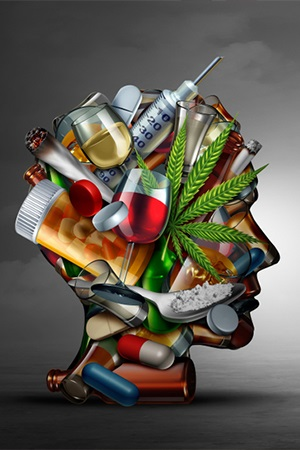
Addiction affects millions of individuals and imposes profound medical, social, and economic costs on today’s society. Furthermore, the emergence of addiction as a global phenomenon presented one of the most pressing global health challenges known to humans. Progressively, addiction is no longer conceptualized as a moral weakness or as a failure of willpower, but rather as a chronic, relapsing neurobiological ailment with well-defined alterations in brain structure and function.
Advances in neuroscientific research have demonstrated that repeated exposure to addictive substances produces maladaptive changes in neural circuits controlling reward circuits, executive control, motivation, and stress reactivity. While prefrontal cortex impairments weaken inhibitory control and decision-making, dysregulation of the mesolimbic dopamine system reinforces compulsive drug-seeking. Simultaneous hyperactivation of the amygdala and hypothalamic pituitary-adrenal (HPA) axis heightens stress sensitivity and relapse vulnerability, further perpetuating the cycle of use. Evidence from neuroimaging studies, genetic research, and animal models consistently supports this model of the disease framework, highlighting addiction’s inherited components and newly formed neuroplastic variations.
This review synthesizes the current view of core neurobiological mechanisms of addiction and examines the empirical evidence supporting the disease model. Additionally, this article addresses outlining implications for treatment, policy, and future research.
Editor-in-Chief

View full editorial board →